What Is Going On Here?
- H&M COO Helena Helmersson will take over as CEO of the apparel retail group when Karl-Johan Persson moves up to Chairman of the Board on May 7, the company announced Thursday.
- Before becoming COO in September 2018, Helmersson managed the company’s sustainable supply chain efforts, eventually rising to Head of Sustainability in 2010 where she reported directly to the CEO. She took on the role of Global Head of Production in January 2015.
- Helmersson joins the short but growing list of CEOs that have risen to that post through the supply chain roles. But this case has new contours since before she headed production overall, Helmersson was on the ground floor of H&M’s industry-leading sustainability work.
What Does This Mean?
- Helmersson’s trajectory signifies the link between apparel retail sustainability and the supply chain that many retailers are just beginning to grasp. H&M ranks sustainability equally among its key performance areas. “This means that each central function and brand is measured on a set of sustainability KPI’s, alongside and in equal weight to sales figures, customer satisfaction, etc.,” reads H&M’s 2018 Sustainability Report.
- Helmersson has on-the-ground experience in H&M’s production, having managed the regional supply chain in Dhaka, Bangladesh, in the early aughts and eventually heading global production out of Hong Kong for five years beginning in 2015 and combining that responsibility with the COO role in 2018.
- The Science-Based Targets Initiative approved the retailer’s carbon reduction targets in December. Furthermore, the company’s relatively new artificial intelligence unit is dedicated in part to improving the sustainability of H&M’s supply chain by better aligning production and demand.
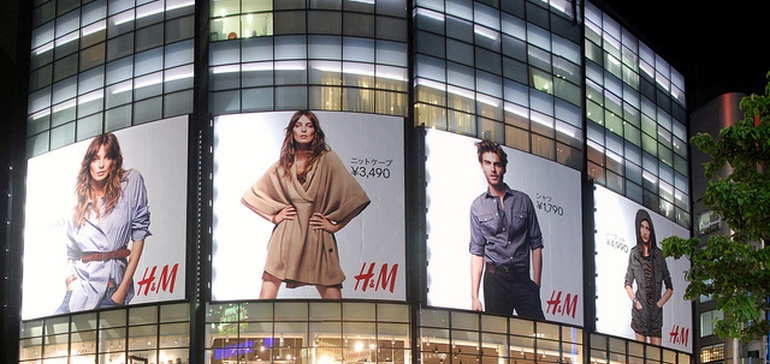
It seems that H&M are doing quite well in terms of making an effort to have a sustainability development with their business model, which is known as “fast fashion”.
- Helmersson, a key author of H&M’s long-term plans and the foundation of its sustainability work, is also a defender of the company’s business model. She claims it is as not inherently bad for people or planet.
- “There is a misconception that lower prices in the stores mean bad working conditions or less pay,” Helmersson said in the company’s 2013 sustainability report. H&M began sharing country of origin and factory details with customers in April. But though H&M is considered a leader in the space, the “fast fashion” model is still inherently problematic in the eyes of sustainability-focused organizations.
“Things are not always what they seem; the first appearance deceives many; the intelligence of a few perceives what has been carefully hidden.”
_Phaedrus_
However, everything is not everything what it seems as “Good On you”, a website that rates brands’ ethical and sustainability work, has gives H&M a middling rating of “It’s a Start” with a score of three out of five on people, planet and animal impact.
“At the end of the day, H&M is still very much a part of the unsustainable fast fashion industry. Its promotion of ‘disposable’ fashion and constant rotations of new trends and products has a huge environmental impact. An increasing amount of cheap clothing ends up in landfill after a few wears due to these reasons,” reads Good on You’s analysis.
Still, Helmersson’s promotion and deep ties to the company’s sustainability work suggest H&M is likely to continue improving the sustainability of its supply chain as planned.
Content source: SupplyChainDive. (2020) H&M operations, sustainability leader will be next CEO. Available from: https://www.supplychaindive.com/news/hm-operations-sustainability-leader-ceo/571570/ [Accessed 5 February, 2020]
 SCM 101